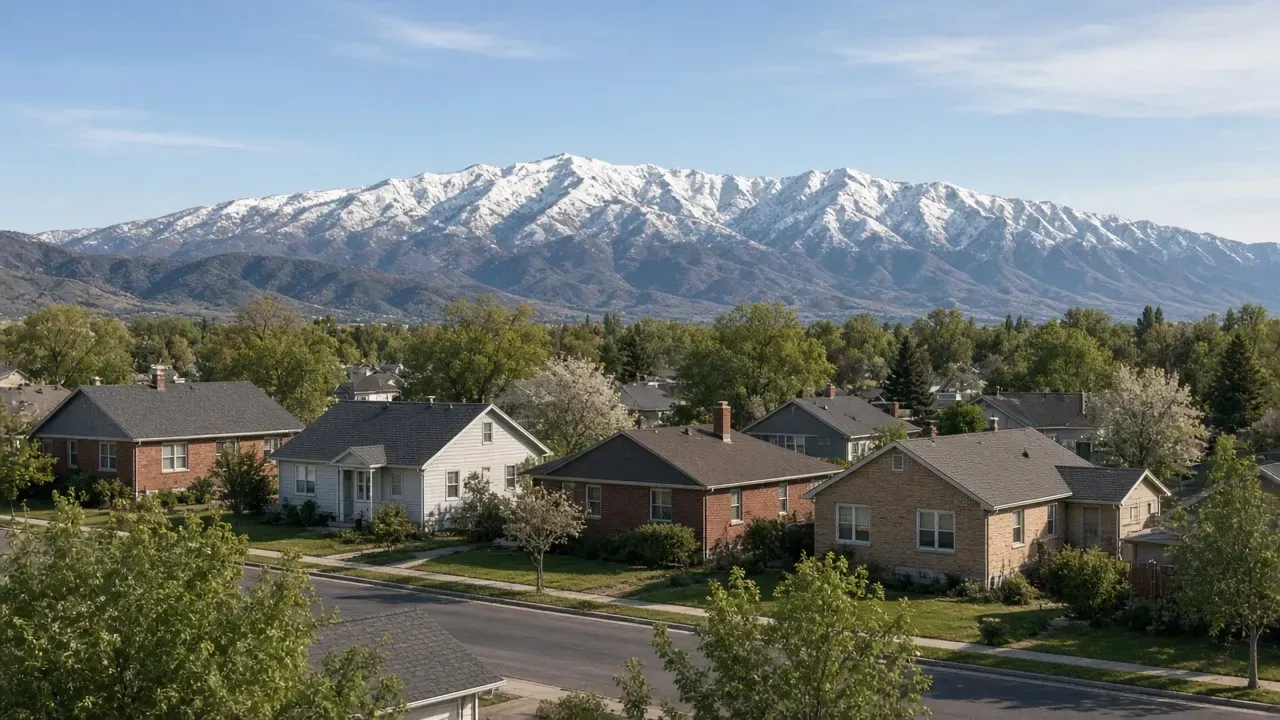
Salt Lake City’s residential streets sit against the Wasatch front — useful context for older services meeting modern loads, not a photo of a particular house or job. Illustrative image, not a photograph of a specific property or a local job.
Salt Lake City, Utah
Electrical panel upgrades in Salt Lake City
A straightforward guide to replacing an aging panel or raising service capacity — including typical cost ranges, city permits, and utility coordination. Written for homeowners, not as a contractor sales page.
Typical published ranges for a residential upgrade often land around $2,000–$4,500+, depending on the existing service and whether the meter base or mast also needs work.
Salt Lake City Building Services requires a permit to install or alter electrical systems. Applications go through the Citizen Access Portal.
Most city addresses are served by Rocky Mountain Power, which coordinates meter disconnects and reconnects on a service change.
Cost figures are published ranges, not quotes. Permit and utility rules can change; confirm current requirements before work starts.
SLC Panel Upgrade is an independent guide, not an electrician. A request may be shared with a local licensed electrician. This site may receive a referral fee. There is no obligation to hire anyone.
When a panel upgrade usually comes up
A panel upgrade is not automatically required just because a house is old. It becomes a live question when the existing service cannot safely support what you already use, or what you plan to add.
The panel is full, outdated, or a known problem brand
Fuse boxes, 60-amp or 100-amp services, and Federal Pacific or Zinsco load centers show up often in older Salt Lake City homes. Insurers and inspectors sometimes ask for replacement. A licensed electrician should confirm what you actually have.
You are adding a large load
A Level 2 EV charger, a heat pump, an induction range, or a hot tub can push a marginal service past its limit. A load calculation — not a guess from the main-breaker label — is the reliable way to tell.
Breakers trip, the panel is warm, or a remodel is planned
Repeated tripping, discoloration, or a kitchen or addition that needs new circuits are practical reasons to have the service evaluated. The answer might be a replacement at the same amperage, a 200-amp upgrade, or a subpanel.
Typical cost ranges in Salt Lake City
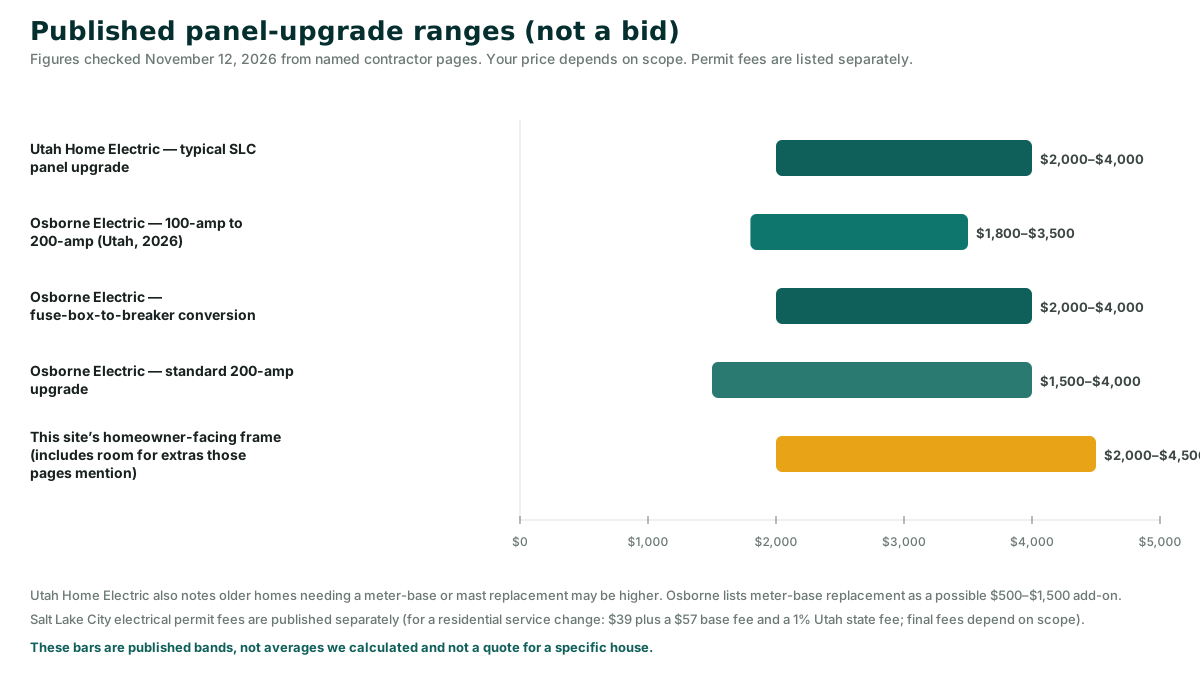
There is no official city price list for the electrical work itself. Local contractor guides published in 2026 describe a typical residential job in a similar band: often about $2,000–$4,500+, with simpler same-amperage replacements toward the lower end and jobs that also replace the meter base, service mast, or grounding toward the higher end.
Published example
Range
What it describes
Utah Home Electric, Salt Lake City page
$2,000–$4,000
Typical panel upgrades; notes that meter-base or mast work can push the job higher.
Osborne Electric, 2026 Utah guide
$1,500–$4,000
Standard 200-amp upgrade. Lists $1,800–$3,500 for a common 100-to-200-amp job.
This site’s working frame
$2,000–$4,500+
A homeowner-facing summary of those published ranges, not a bid or a guarantee.
Published bands, not averages we calculated and not a quote. Permit fees are separate and much smaller than the construction cost.
City permit fees are separate and much smaller than the construction cost. Building Services publishes a fee schedule that includes a $57 base fee, a $39 residential electrical service-change or alteration fee for single- or two-family dwellings, and a 1% Utah state fee. Final fees depend on scope. Read the cost guide before you compare quotes.
Process and permits
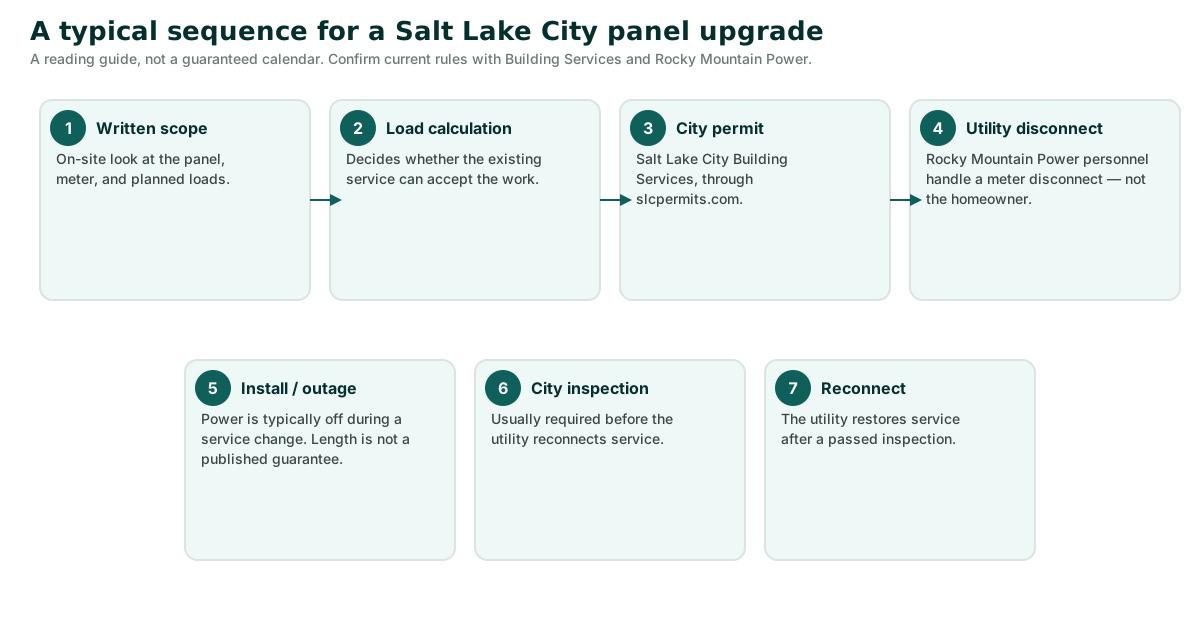
Inside Salt Lake City, two systems usually have to line up: a city electrical permit and, for most addresses, Rocky Mountain Power’s disconnect and reconnect rules.
01
On-site look and load calculation
An electrician reviews the existing panel, service entrance, grounding, and the loads you plan to add. That visit is what turns a published range into a written scope.
02
City permit
Building Services requires a permit to install or alter electrical systems. Applications are submitted through the Citizen Access Portal. New EV installations also go through a plan-review path.
03
Utility coordination
If the meter must be pulled, Rocky Mountain Power personnel handle the physical disconnect. Customers and contractors are not supposed to tamper with the utility meter.
04
Inspection and reconnect
A Building Services inspection typically has to pass before the utility restores service. The outage window depends on scheduling, not a published guaranteed hour count.
A typical sequence, not a guaranteed calendar. Rocky Mountain Power does not, in the documents reviewed for this site, publish a guaranteed residential outage length for a panel swap.
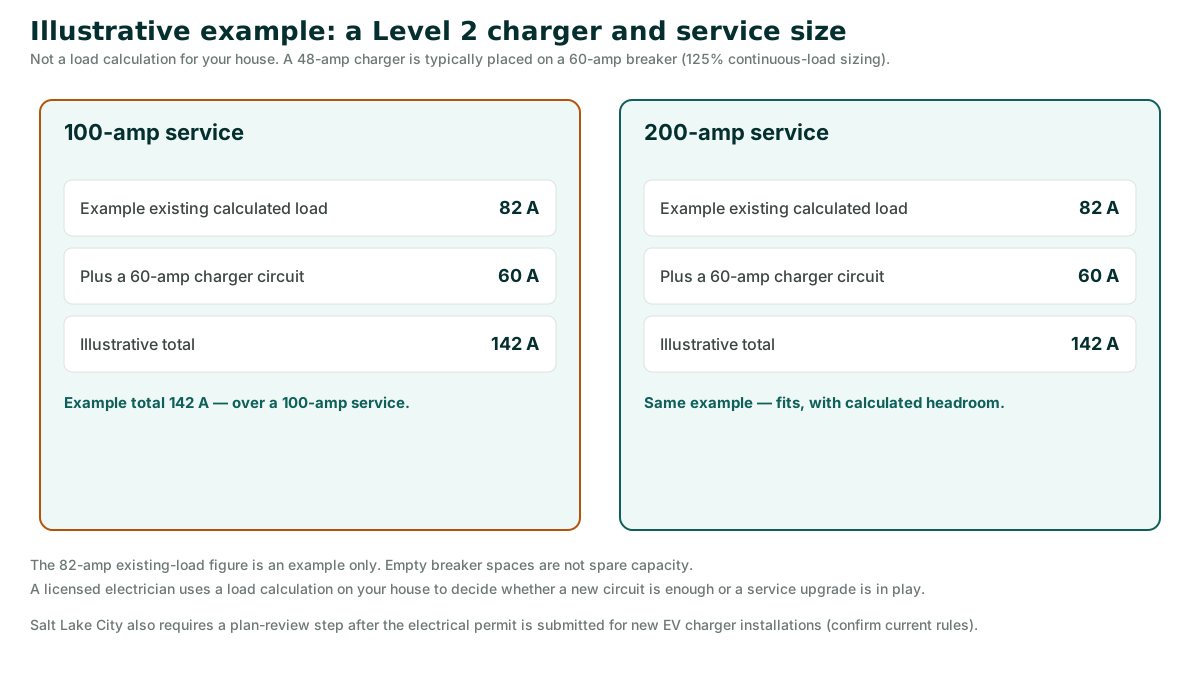
A home Level 2 charger is one of the most common reasons Salt Lake City homeowners start asking about panel capacity. The charger itself is only part of the job. The National Electrical Code treats EV charging as a continuous load, so the circuit is typically sized larger than the charger’s nameplate current. Building Services also requires a plan review for new EV installations after the electrical permit is submitted.
Illustrative example — not a load calculation for your house. A 48-amp Level 2 charger is typically placed on a 60-amp breaker (125% continuous-load sizing).
If your panel is already tight, the honest answers are usually: upgrade the service, add a subpanel if the main has capacity, or use a load-management device. The EV charger page and the heat pump page walk through those options without treating a 200-amp upgrade as automatic.
Neighborhood notes
Salt Lake City’s older east- and north-side neighborhoods were largely built before central air, electric ranges, and garage chargers were normal. Local electricians commonly report 60-amp or 100-amp services, fuse boxes, and Federal Pacific or Zinsco panels in that housing stock. Those are field reports, not a survey this site conducted. Your panel is the only one that matters.
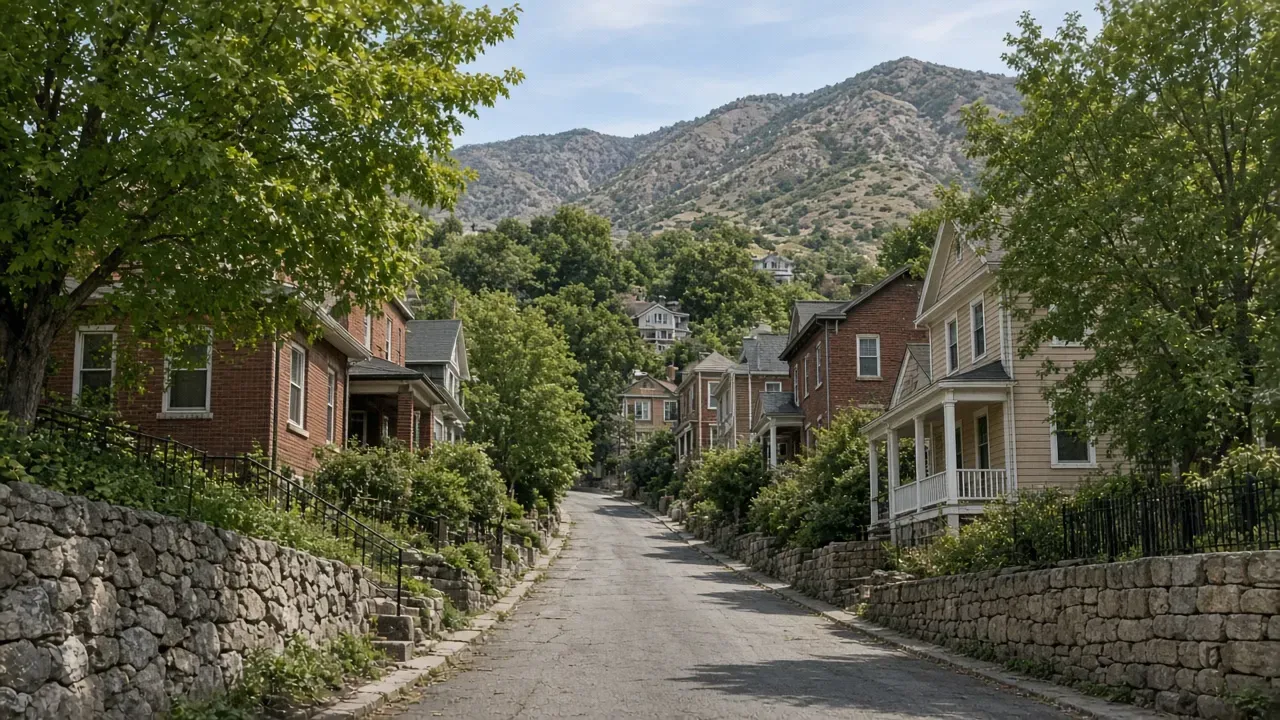
The Avenues climb the lower Wasatch slopes, with older houses, narrower streets, and hillside lots that can affect how a service upgrade is planned. Illustrative image, not a photograph of a specific property or a local job.
The Avenues
The Avenues sit northeast of downtown on the lower Wasatch slopes. Lots were surveyed in the early 1850s, and the neighborhood developed through the late 19th and early 20th centuries. Part of it is in the Avenues Historic District, listed on the National Register in 1980. Older brick and period houses, narrower streets, and hillside access can all affect how a service upgrade is planned. Avenues panel upgrade guide.
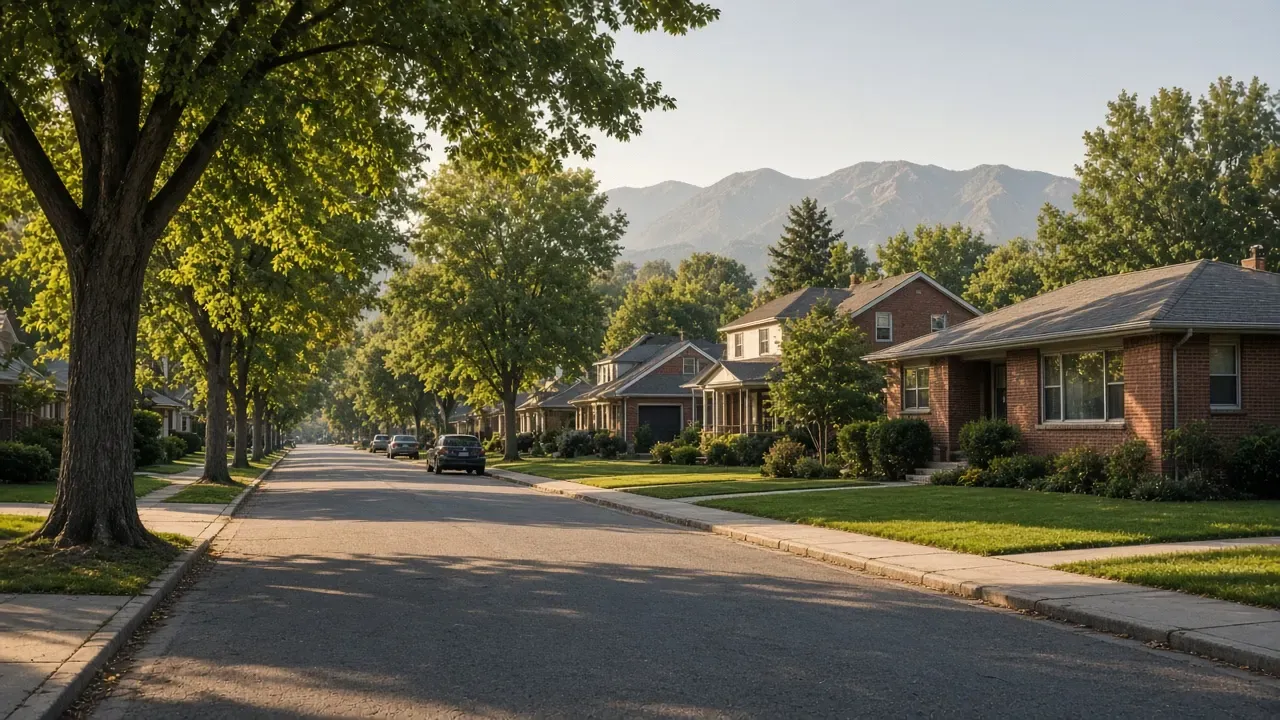
Sugar House mixes early-twentieth-century houses, mid-century homes, and later infill — a common setting for 100-amp services, remodels, and EV charging questions. Illustrative image, not a photograph of a specific property or a local job.
Sugar House
Sugar House is often called Salt Lake’s “second downtown,” with a mix of early-20th-century houses, mid-century homes, and more recent infill around Sugar House Park and the commercial core. Mid-century houses are where Federal Pacific and similar load centers are often discussed. Remodels and EV charging are common reasons to revisit a 100-amp service. Sugar House panel upgrade guide.
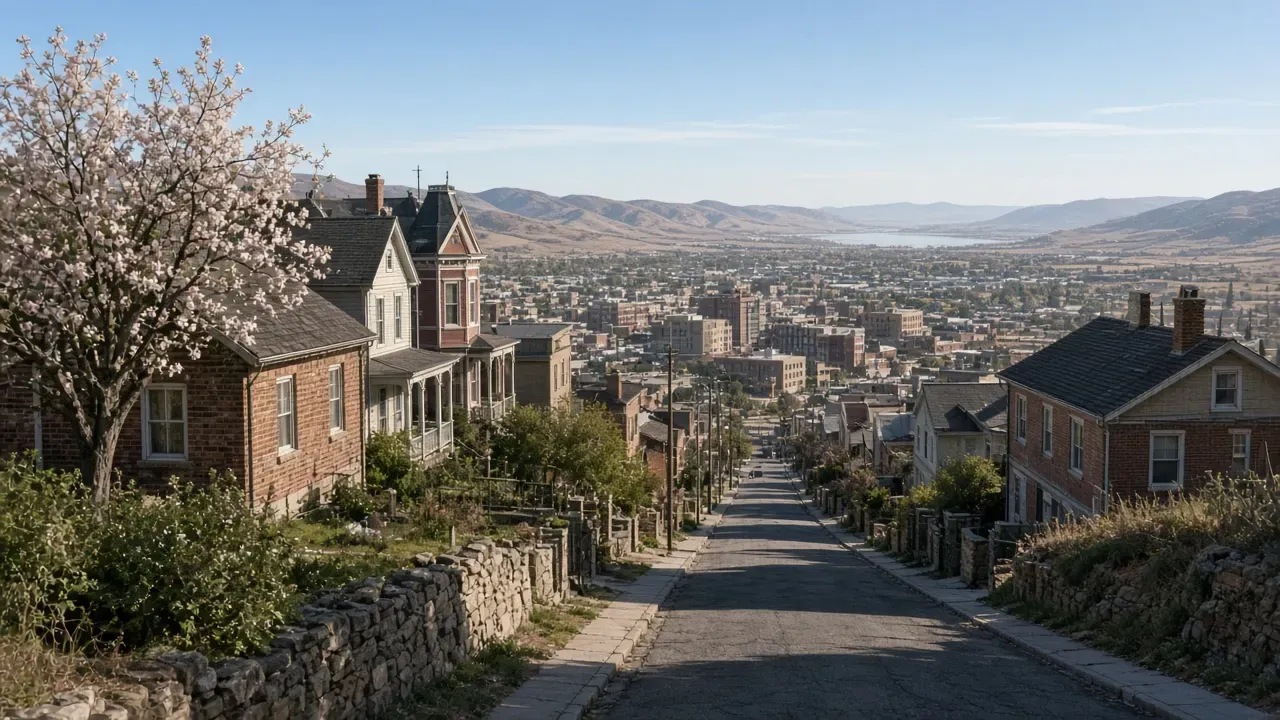
Capitol Hill drops toward downtown. The western slope, often called Marmalade, is known for steep, narrow streets and houses that mostly predate 1930. Illustrative image, not a photograph of a specific property or a local job.
Capitol Hill
Capitol Hill is the neighborhood defined by the Utah State Capitol, just north of downtown. The western slope, often called Marmalade, is known for steep, narrow streets and houses that mostly predate 1930. Confirm whether your address is inside city limits and whether your bill is from Rocky Mountain Power before a contractor schedules a disconnect. Capitol Hill panel upgrade guide.
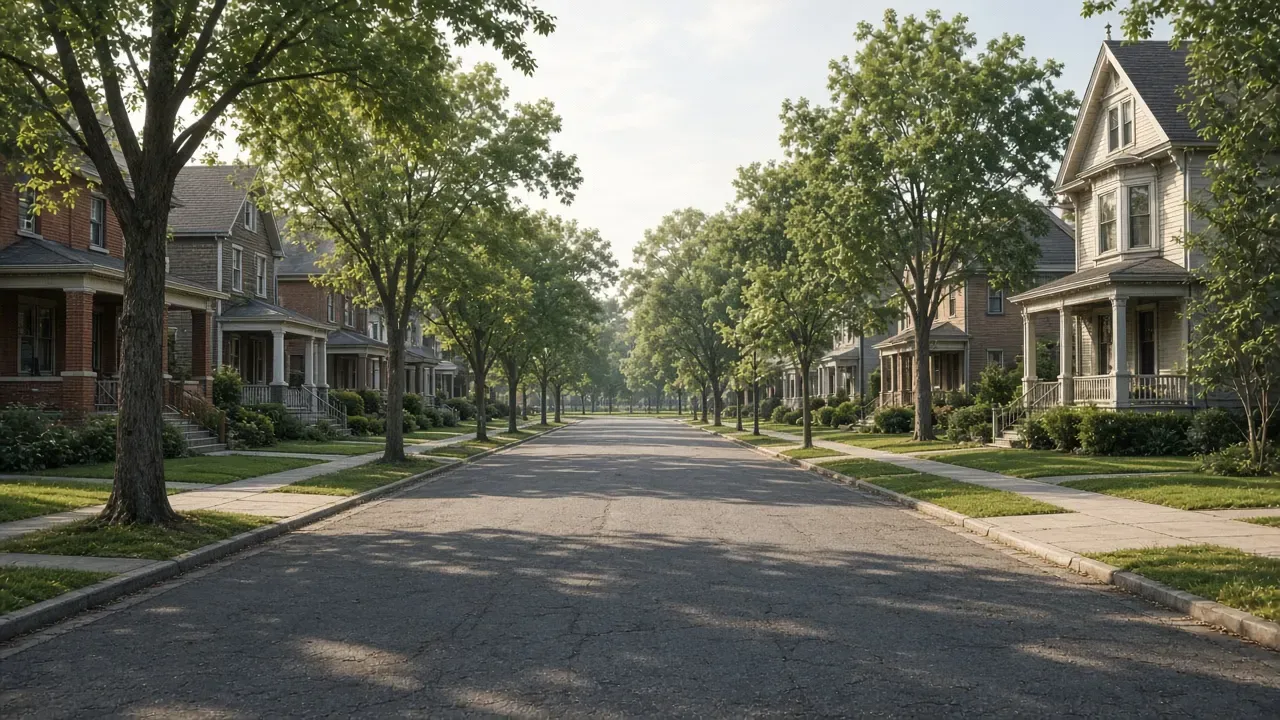
Liberty Wells is a walkable neighborhood of bungalows and Victorian houses south of downtown, between State Street and 700 East from 900 South to 2100 South. Illustrative image, not a photograph of a specific property or a local job.
Liberty Wells
Liberty Wells sits south of downtown, from 900 South to 2100 South between State Street and 700 East, and is known for bungalows and Victorian houses. Part of the neighborhood is in the Liberty Wells Historic District on the National Register. Older 60-amp or 100-amp services still come up in this housing stock. Liberty Wells panel upgrade guide.
Service area
This guide is written for homeowners in Salt Lake City, including the Avenues, Sugar House, Capitol Hill, and Liberty Wells. It is not a claim that a named electrical company already covers every block, and it does not invent a list of completed jobs. If your address is just outside the city — for example in Millcreek or South Salt Lake — permit rules may belong to a different building department even when Rocky Mountain Power is still the utility. The guides hub lists every topic page.
How a heat pump affects electrical load, and why a 200-amp upgrade is not automatic.
Frequently asked questions
Do I need a permit to upgrade or replace an electrical panel in Salt Lake City?+
Yes. Salt Lake City Building Services lists installing or altering an electrical system as work that requires a permit. Applications go through the Citizen Access Portal at slcpermits.com. A licensed electrician typically pulls the permit for contracted work. Confirm the current requirement for your exact scope before work starts.
How much does a panel upgrade cost in Salt Lake City?+
Published local ranges for a typical residential panel upgrade often fall around $2,000–$4,500+, and sometimes higher when the meter base, service mast, or grounding also need work. Utah Home Electric has published a Salt Lake City range of $2,000–$4,000; Osborne Electric’s 2026 Utah guide lists $1,500–$4,000 for a standard 200-amp upgrade and $1,800–$3,500 for a common 100-to-200-amp job. These are published ranges, not quotes for your house. Ask for a written, itemized estimate.
Does Rocky Mountain Power have to be involved?+
Usually, if the work requires a meter disconnect or a service change. Rocky Mountain Power’s Electric Service Requirements say that physical disconnects are done by Power Company personnel, and that customers are not authorized to work on the company’s meter. Your electrician coordinates the disconnect and reconnect with the utility, and a city inspection is typically required before service is restored. Most Salt Lake City addresses are served by Rocky Mountain Power; check the logo on your bill.
Will I need a panel upgrade to add an EV charger or a heat pump?+
Not always. A Level 2 charger or a heat pump is a large continuous or heating load, and a 60-amp or 100-amp service that is already full may not have room. A 200-amp panel is more likely to have capacity, but only a load calculation on your house can say. Sometimes a subpanel or load-management equipment is enough. See the EV charger and heat pump guides.
What if my home has a Federal Pacific or Zinsco panel?+
Those older load-center brands are widely discussed as safety and insurance concerns. Many insurers and home inspectors flag them, and local electricians often recommend replacement rather than repair. This site cannot diagnose a panel from a photo. A licensed electrician should inspect the equipment in person. See the Federal Pacific and Zinsco guide.
Is this site an electrician?+
No. SLC Panel Upgrade is an independent educational guide operated by ReZero Group LLC. It is not affiliated with any one electrician, with Salt Lake City Building Services, or with Rocky Mountain Power. A request may be shared with an independent local licensed provider when a partner is in place, and this site may be paid for that referral.
Request a written look at your panel
If you want a licensed electrician to review your service and planned loads, share a few details. This site is not an electrician and is not affiliated with any one contractor. When a local partner is in place, your request may be shared with that independent provider.
SLC Panel Upgrade is an independent guide, not an electrician. A request may be shared with a local licensed electrician. This site may receive a referral fee. There is no obligation to hire anyone.