Electrical panel upgrades on Capitol Hill
Capitol Hill is the neighborhood defined by the Utah State Capitol, just north of downtown. A panel project here is usually about an older service on a steep lot meeting modern loads, not about a hill-specific electrical code.
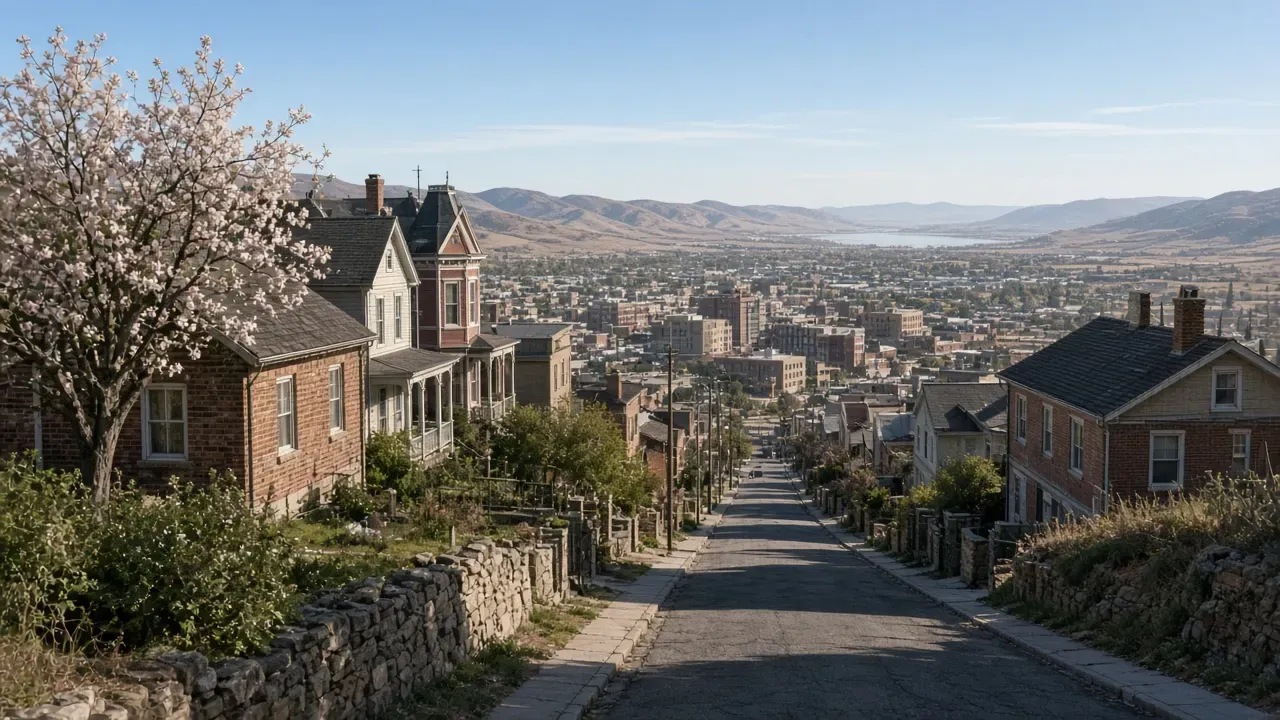
The hill slopes down to the south and overlooks downtown; the Utah State Capitol was built at the top between 1912 and 1916. The east slope drops sharply into City Creek Canyon, with the Avenues on the far side. The west-sloping side is a historic residential area often called Marmalade — originally for fruit-tree plantings and fruit-named streets — with irregular, narrow, and steep roads that break from the city’s usual grid.
Historic housing, not a special electrical code
The Capitol Hill Historic District was listed on the National Register of Historic Places in 1982 and expanded in 2002. Salt Lake City describes Marmalade as one of the oldest neighborhoods in Utah, included in that historic district, with a majority of homes built before 1930 and a mix of architectural styles on tight lots. That history is useful electrical context: many houses predate 200-amp services, central air, and garage charging. Historic-district status can affect exterior work; it does not replace a load calculation or a city electrical permit.
What this usually looks like on a Capitol Hill house
This site has not inspected houses on the hill and does not invent a project list. Treat the age of the housing stock as a reason to look at your own panel. Common questions include:
- Is the existing service 60 amps or 100 amps, and is it still a fuse box?
- Is the equipment a later breaker panel — including brands such as Federal Pacific or Zinsco?
- Where is the meter and weatherhead on a steep lot or a tight side yard, and will access change the labor?
- Are you adding a Level 2 EV charger, a heat pump, or a remodel that needs new circuits?
Permits and the utility
Addresses inside Salt Lake City use Building Services and the Citizen Access Portal at slcpermits.com. Most addresses are on Rocky Mountain Power; if the meter must come out, utility personnel — not the homeowner — perform the physical disconnect. The permits and process guide and the day-of guide cover the usual sequence. Published citywide cost ranges still apply; there is no official Capitol Hill surcharge. See panel upgrade cost in Salt Lake City.
Nearby context: the Avenues and Liberty Wells. All neighborhood and topic guides are listed on the guides hub.
Frequently asked questions
Who issues the electrical permit on Capitol Hill?
If the address is inside Salt Lake City, Salt Lake City Building Services issues the electrical permit. Applications go through the Citizen Access Portal at slcpermits.com. Confirm the address is in city limits before a contractor files.
Is Marmalade part of Capitol Hill?
The Marmalade neighborhood sits on the western slope of the hill. Salt Lake City describes it as running roughly from 200 West to Victory Road/Columbus Street and from 300 North to 900 North, and includes it in the Capitol Hill Historic District. The same city permit and, for most addresses, Rocky Mountain Power rules apply.
Do steep lots change the electrical rules?
They can change the labor and whether the meter or mast has to be moved, but they do not create a separate electrical code. Salt Lake City Building Services and Rocky Mountain Power still govern the permit and any meter disconnect.
Are 60-amp or fuse services common here?
Capitol Hill is one of the city’s older residential areas, and many houses predate 200-amp service. A 60-amp or 100-amp service, or a fuse box, is a reason to look at your own panel — not a diagnosis of every house on the hill.
Request a quote
A local licensed electrician can look at your panel, service, and planned loads and give you a written scope. There is no obligation to hire anyone.